Ouro Preto
Founded at the end of the 17th century, Ouro Preto emerged as the epicenter of Brazil’s gold rush and the heart of the country’s economic, political, and cultural life during the 18th century. Then known as Vila Rica, the city attracted thousands of people from different regions and played a decisive role in the formation of colonial Brazil.
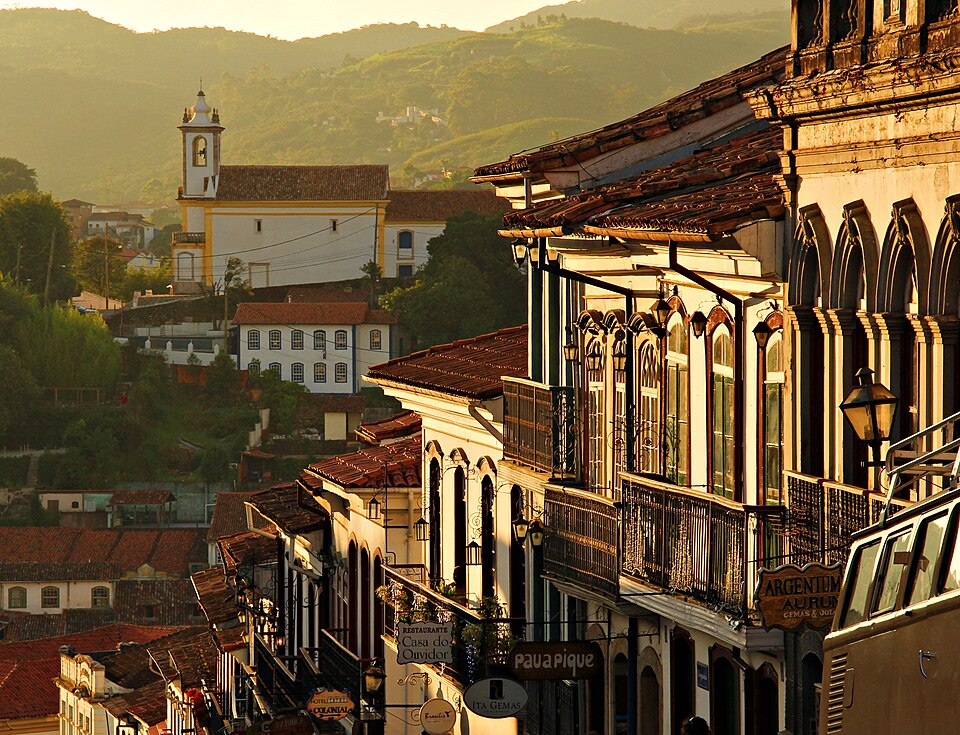
Its architecture is one of the most outstanding ensembles of Brazilian Baroque, characterized by harmonious integration between buildings and the rugged topography. Churches such as São Francisco de Assis and Nossa Senhora do Carmo display elaborate stonework, gilded woodcarving, and refined artistic programs, many of them associated with the work of Aleijadinho and his contemporaries. Residential buildings, with whitewashed façades, wooden balconies, and tiled roofs, line narrow, winding streets and help preserve the original colonial urban layout.
Set amid the mountainous landscapes of Minas Gerais, Ouro Preto is surrounded by hills, valleys, and remnants of the Atlantic Forest, creating striking visual contrasts between architecture and nature. The city’s dramatic scenery, shaped by steep slopes and panoramic viewpoints, reinforces its unique character and historical authenticity. With the decline of mining activities in the 19th century, Ouro Preto’s influence diminished, but this same process contributed to the preservation of its architectural and natural heritage. Today, recognized as a UNESCO World Heritage Site, Ouro Preto stands as a living testimony to the close relationship between art, landscape, and history in Brazil.